

No one should have a storage unit
Our living environments are being repurposed to serve the virtual world in which we now dwell.
This is RiffPost, a weekly newsletter for people 38 and older. For information on what this newsletter is not about, click here. If you don’t like this post, I promise the next one will be different. Thank you for reading. —Nick Catucci
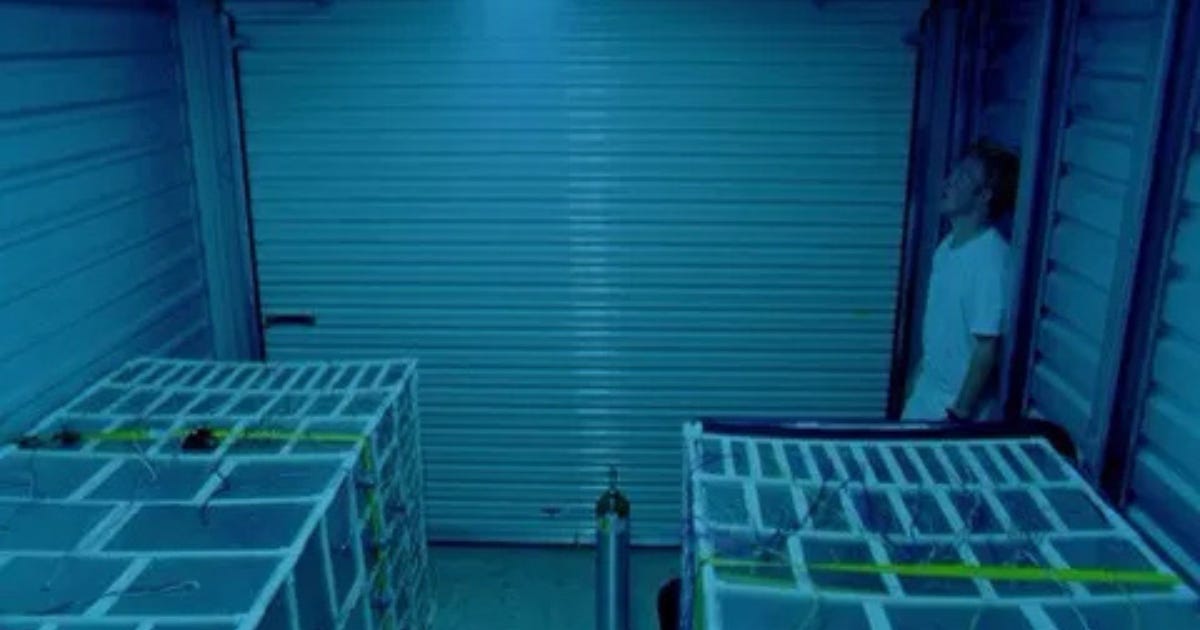
I grew up in rural northwest Rhode Island, in an airy, mid-century modern–style house with dramatic lines and vaulted ceilings. In the mid-’80s we built an addition—eccentrically designed by my father, who is not an architect—to house an indoor pool, and it created odd liminal spaces, like a closed-in porch off the master bedroom and a two-room third level, accessed by some hidden stairs, that one of my older brothers lived in.
When I was in eighth grade, with my parents divorced and my dad having lost his business, we sold the house under threat of foreclosure, and my mother, younger brother, and I moved into a duplex apartment in a more populated area nearby. Many of our belongings—including fine furniture we no longer had the space for, but also the contents of our liquor cabinet, old bicycles my brothers could not bear to part with, and a variety of other objects that had lurked in crawl spaces, a loft, and the garage—were taken to the mill building my dad had planned to operate his business out of. Over the years, these belongings would be scattered and broken and lost as they were shunted around and discovered by transient tenants of the building.

None of us are hoarders, but my family does now fall squarely into two categories: The accumulators, like my father and two of my brothers, and the minimalists, which include my mother, oldest brother, and me. We were born into these categories, but I don’t doubt that the ordeal of losing our home and seeing our possessions sacrificed or lost intensified our dispositions. We either tightened our grip on our objects, or minimized their importance. Since leaving for college, I’ve lived exclusively in small apartments. Today my wife, seven-year-old daughter, small dog and I share a two-bedroom with one bathroom and a few small closets. I have cultivated the ability to let go of crap.
So maybe I’m biased when it comes to storage units. My wife loves to throw shit out—when we were dating, I was once a little shocked to see she’d simply pitched the rug and curtains in her apartment because, she said, they were accruing dog hair—but we exchanged words when I told her I planned to write this essay. To her regret, I successfully convinced her a couple years ago that we should not take a storage space that had become available in our building. It would have been a place to put our window air-conditioner units in the colder months, along with everything else taking up limited closet capacity. But it would have cost us $1,200 per year to lease—$1,200 we didn’t need to spend, and presumably would then spend every year, forever. But more important, renting the unit also would have, I was sure, caused to us to sprawl. We would be less likely to edit what we owned, because it was out of the way, but also, we’d hold onto more, moving it to storage when it crowded our living space.
No one loves storage facilities. They’re ugly and devoid of life; what life they sometimes contain, homeless people seeking what shelter they can afford, is illegal (not to mention an indictment of society).
The self-storage business was an early manifestation of our contemporary economy, in which our living environments are being repurposed to serve the virtual world where we increasingly dwell, physically anchored in the form of cell phone towers, ghost kitchens, and data centers. Strip malls aren’t exactly the peak of civilization, but at least people interact and even socialize within them. Key aspects of our existence have been disembodied, our thinking exported into those data centers, our cooking and dining conducted in hiding. And into the storage units we extrude not only our surplus consumption, but the very awareness of our consumption—the scale and the burden of it.
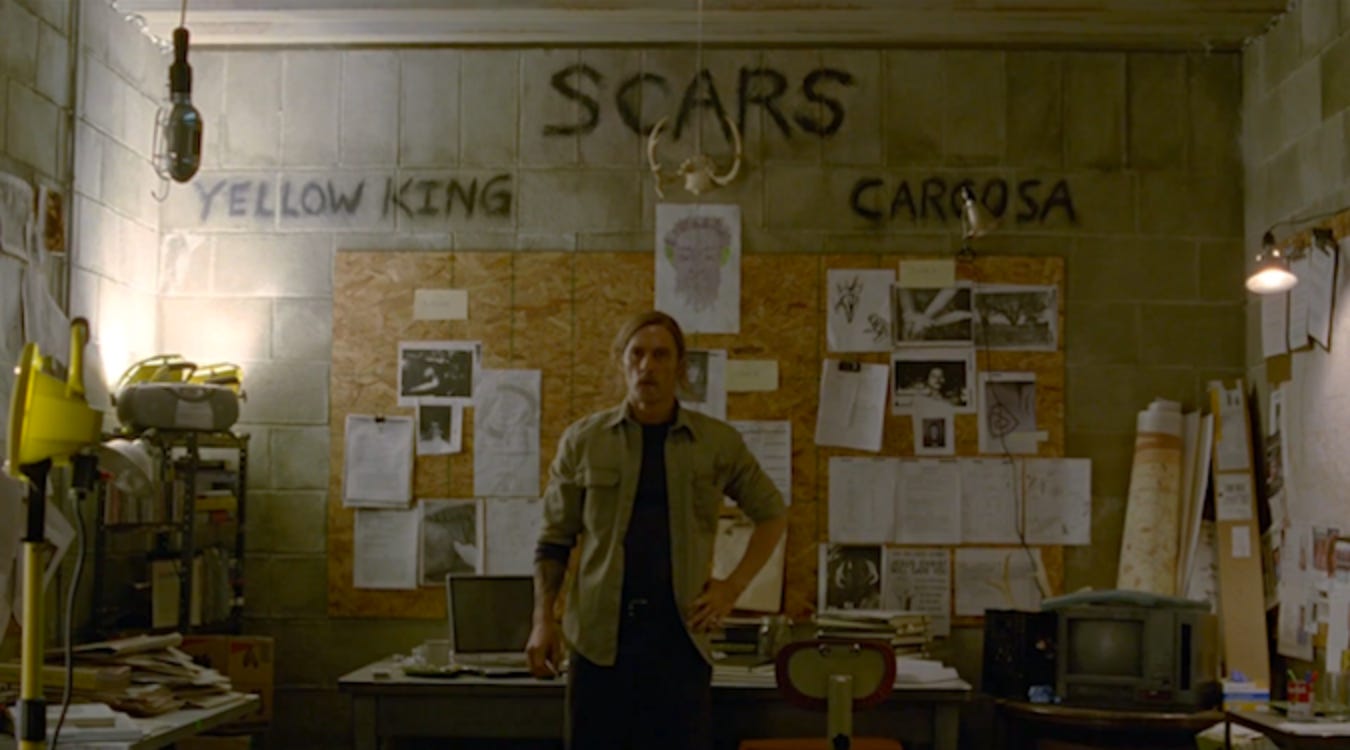
Onto this American dark matter we project our fears and fantasies. We see the terrorist, stockpiling his weapons behind a roll-up door, on the news or in a movie. It’s where Rust Cohle keeps his snuff tape. Storage Wars, still airing after 18 seasons, tells the story of unearthing treasure, or simply extracting value, from the confiscated belongings of people who miss their rental payments.
NIMBYs, of course, hate storage facilities. (Picture, if you will, the retired, junk-hoarding Boomer attending a town council meeting to oppose the construction of a warehouse that will drive down the value of a too-large home, worth multiples of what they paid for it, that they are also hoarding.) But the storage business is coming into the sights of YIMBYs, too: My younger brother recently told me that Providence, where he lives, banned new ones in 2023. “In some local government and urban planning circles,” The Wall Street Journal reported in April, “the windowless establishments are seen as hogging land and creating dead zones where there ought be street life. This is especially true now that the kind of storage facilities that 30 years ago were mom and pop operations, with mom and pop living on the premises, are managed remotely by large corporations.” Fifteen states across the country have enacted bans in the last seven years.
The article also highlights the industry standard of baiting new customers with a “street” rental rate that soon converts to an “achieved price” about 20 percent higher. “A spider builds its web to be invisible so insects don’t even realize they’re flying into it, and in such a way that the harder you struggle once ensnared, the harder it becomes to escape,” P.E. Moskowitz wrote in a great 2025 essay on quitting DoorDash. “The internet, I’ve realized, works exactly the same way.” Expense aside, making a meal or even simply walking to a sandwich shop, Moskowitz discovered, was more fulfilling than the frictionless experience of ordering food through an app.
Clutter is friction. Indeed, for me, is it a very real source of stress. But to consign it to self-storage is not that different than unloading our shopping and cooking on app workers. And while I have some neuroses about my stuff, wanting to keep and protect it the way that I could not when I first moved out of the home that I was born in, I’m an adult. Virtually everything that I now own, I decided at some point to buy (or take off someone’s stoop, alleviating someone else’s guilt over no longer having a use for something they bought—but I digress). To pay a corporation to hide it from me seems pointless at best, and spiritually ill at worst.
News from my world this week